
I sat down with Pete Dye a few years before he passed and asked him the question every golf writer asks: of everything you built, what are you proudest of? He did not say Sawgrass. He did not say Whistling Straits. He said Casa de Campo. Not just Teeth of the Dog, the whole resort. He and Alice and a few hundred locals with pickaxes and oxen carved a golf course out of coral and jungle in the early 1970s, and a 7,000-acre playground grew up around it. When the man who built half the hardest courses in America tells you his proudest work is on a sugar cane island in the Caribbean, you go play it.
So here is what you need to know about golf in the Dominican Republic, staying at Casa de Campo in La Romana, and what to do when you are not chasing a Titleist into the sea.
Teeth of the Dog: The Reason You Are Here
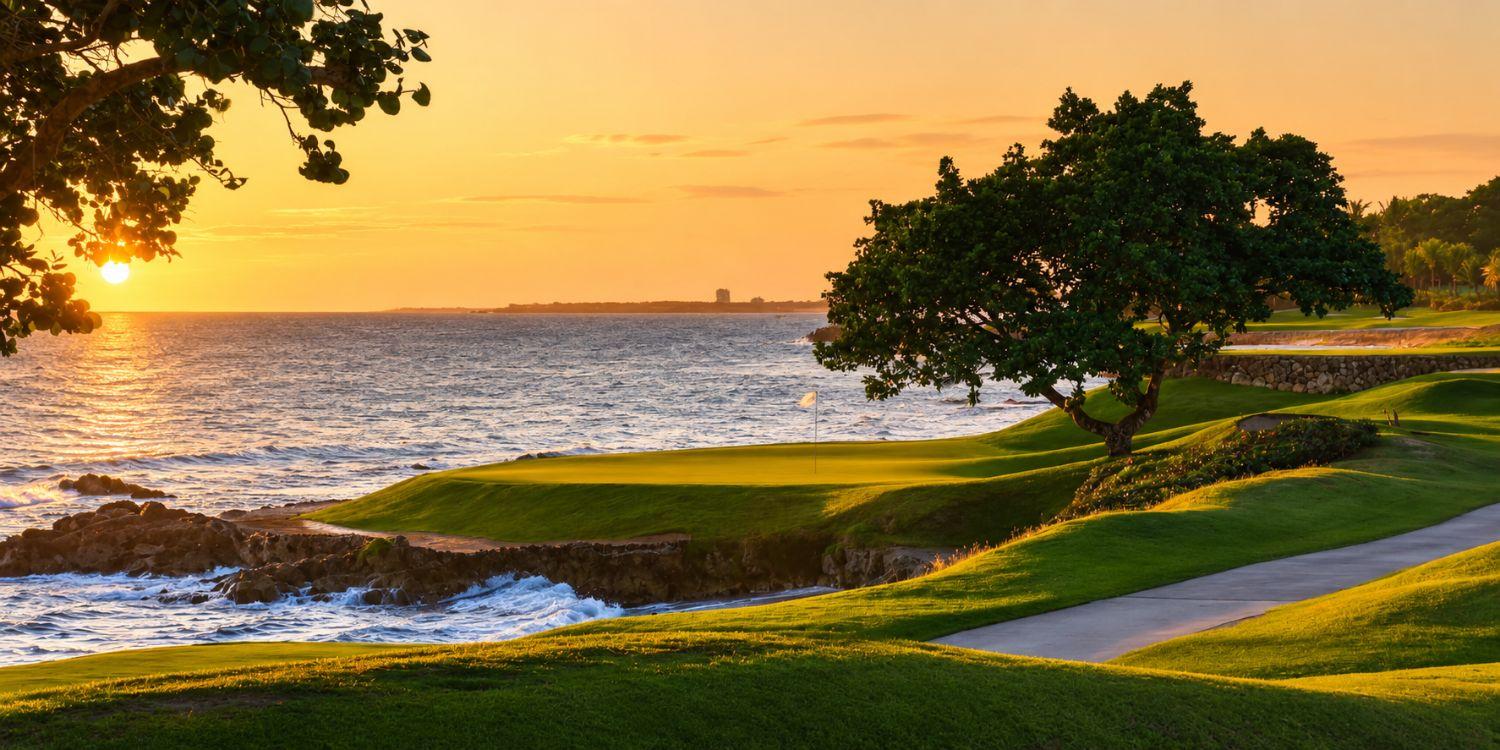
Teeth of the Dog is the number one ranked course in the Caribbean and has been for about as long as rankings have existed. It regularly lands inside the top 50 in the world. Seven holes play right along the ocean, holes 5 through 8 on the front and 15 through 17 on the back, and the coral outcroppings that give the course its name look like exactly what they are: jagged teeth waiting to eat your golf ball.
The short par 3 fifth is the one you have seen on every screensaver. It plays around 170 yards from the back, the tee is jammed against a rock wall with surf pounding behind you, and the green pokes out into the Caribbean on a peninsula. That green is smaller than a beach towel. I stood on that tee with a full breeze off the water, watched the caddie hold up two fingers for two clubs of wind, and then hit the shot of the trip. I also three-putted. That is Teeth of the Dog in one hole.
Two tips, and I mean these.
First, take a caddie. The resort offers them and they are worth every peso. They know the aiming points on the blind tee shots, they know that the ball breaks toward the ocean even when your eyes say otherwise, and they will save you four or five shots a round without trying. Ask for Sony. He is the best caddie I have had anywhere in the Caribbean, and I have looped with a lot of them.
Second, stop at the turn and grab a couple of Presidentes, the local beer, ice cold in the little bottles, and a hand rolled Dominican cigar. You are playing one of the great courses on earth with the trade winds in your face. Act like it.
Dye Fore: Golf on the Edge of a Cliff
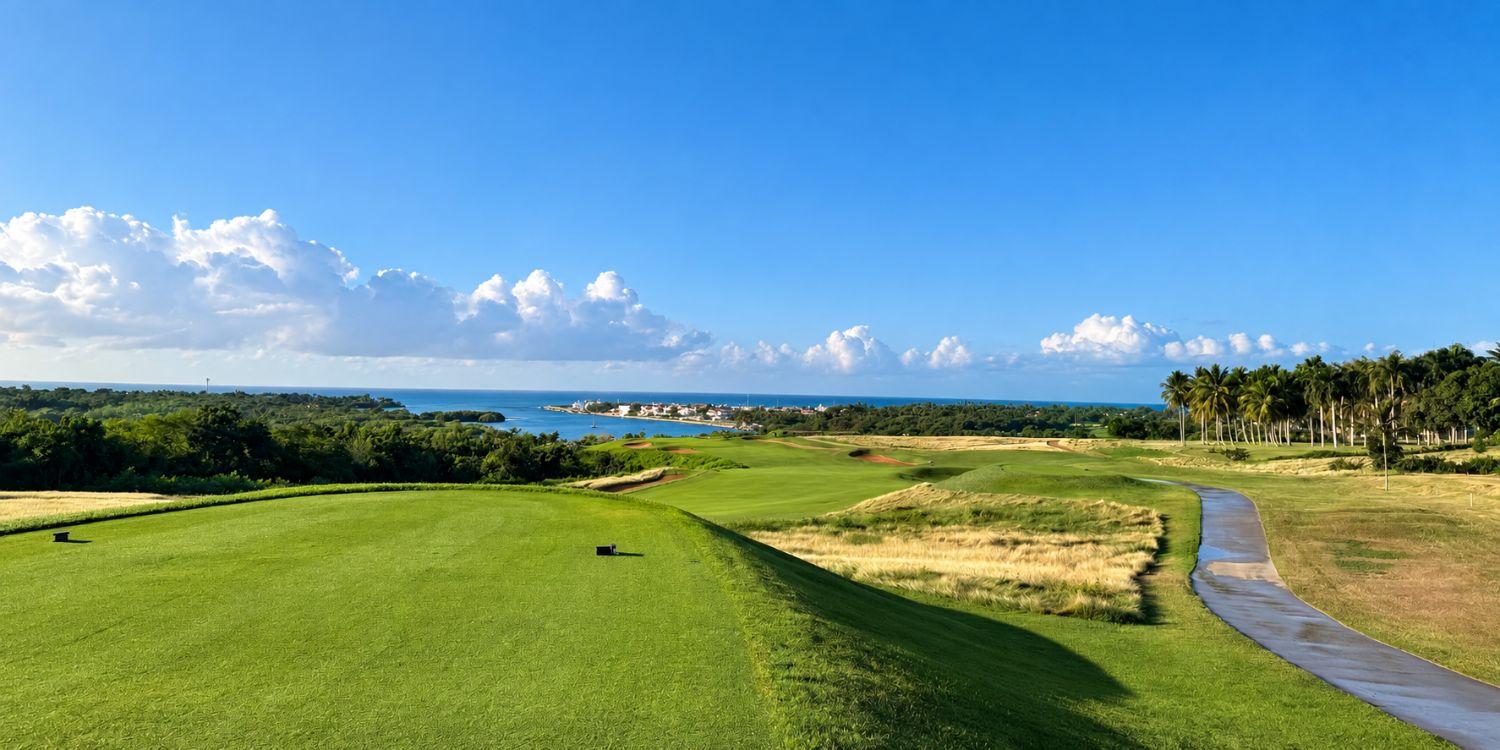
Most people fly home after Teeth of the Dog thinking they saw the best of Casa de Campo. They did not. Dye Fore is 27 holes up on the bluffs above the Chavon River, and the Chavon nine might be the most nerve rattling stretch of resort golf in the hemisphere.
The three nines each play along a distinct part of the property, and the Chavon is the one people argue is the most scenic. Its holes hang on cliffs 300 feet above the river. You will be nervous on every tee shot, and I do not say that as a knock. The fairways are wider than they look, but when a slice means your ball is airborne for eight seconds before it lands in the jungle, your grip pressure tends to go up. Golfers are not the only ones showing up with cameras. Filmmakers found the river and the cliffs a long time ago, and the Chavon's credits include Apocalypse Now in 1979 and Jurassic Park in 1993. If you feel like something is about to come out of the jungle and eat you, that is historically accurate.
The signature hole is the par 3 12th on the Chavon nine, and it is the first place on the course where you get the full dramatic look at the Chavon River flowing out to the sea. It is a brute from the back, 235 yards from the Black tees, 214 from the Gold, 180 from the Blue and 170 from the White, played across a jungle ravine to a green on the edge of the cliff. Pick the tee that lets you hit a club you actually trust, because there is no bailout that ends well. Here is the side note that stuck with me: Dye Fore is one of only four golf courses in the world where you can stand on a tee box and see a major river, a mountain range and the ocean at the same time. Take a minute up there. Nobody in your group will complain.
My personal favorite is the second on the Chavon nine, a par 4 perched right on the cliff edge with the river winding underneath the green. It is not the most famous hole out there, but it is the one where I first understood what Dye was doing with the land.
The Marina nine plays down toward the harbor with views of the Caribbean and the yachts, and the Lagos nine, which most guests call the Lakes, should really be renamed The Wind. It sits up high, the breeze never stops, and there is water on five of the nine holes. Bring extra balls and a sense of humor.
The Dye Fore clubhouse is a Spanish style building sitting right on the edge of the cliff with a patio that is one of the best 19th holes in golf. For a proper meal after the round, drive up to Altos de Chavon and get a table at La Piazzetta. It was the first restaurant Casa de Campo ever opened, Oscar de la Renta designed the room, and it has a fair claim to being the best Italian restaurant in the Dominican Republic. The pastas are handmade every day. Sitting up there looking down at the river gorge you just played over with a plate of pasta and a glass of wine is the right way to end the day.
The third course, The Links, is an inland Dye layout with lakes and Bahia grass framing the bunkers. It is the most playable of the three and a good option if your group has a couple of higher handicaps who need a break from getting punched in the mouth.
Where to Stay: Grab the Cart, Grab the Map
Casa de Campo is not a hotel. It is a small country. The resort covers 7,000 acres with three golf courses, a marina, a fake 16th century Mediterranean village, a shooting center, an equestrian center with polo, 13 tennis courts, a private beach, and more than a dozen restaurants and bars. When you check in they hand you the keys to a four seat golf cart. Take it, and then take the map, because you will get lost at least once and every road looks the same at night after a few rums.
Lodging comes in three basic flavors:
Rooms and Elite Suites. The main hotel has roughly 300 rooms and suites in casita style buildings near the Teeth of the Dog clubhouse, with garden or golf course views, balconies or terraces, and your golf cart parked outside. The Elite suites go up to two bedrooms, so a foursome can split one and still have a living room to argue about the bets in.
The Premier Club. This is the newer upscale wing with 58 suites, a private concierge, nightly turndown, a dedicated lounge with complimentary bites and drinks through the day, and a nicer cart. If you are a couple, this is the play.
Villas. This is where Casa de Campo separates from everyone else. Private villas on the golf course or the ocean, three to eleven bedrooms, private pools, full kitchens, and a maid and often a butler included. Split an oceanfront villa eight ways for a buddy trip and it is not much more per person than a room, and you get a chef cooking breakfast and a pool to fall into after the round.
The resort also offers all inclusive rate plans that cover most of the restaurants and bars. Run the numbers, because a group that eats and drinks the way golf groups eat and drink usually comes out ahead.
What to Do When You Are Not Golfing
Spa. The Spa Casa de Campo is an 18,000 square foot facility with a hydrothermal circuit, an outdoor pool, a dozen treatment rooms, and a Forbes Four Star rating. Golf buddies will pretend they do not want a massage after 36 holes and then all book one. Couples should just plan on an afternoon here.
Minitas Beach Club. The resort's private beach with an infinity pool, cabanas, and a restaurant that does a great Sunday brunch. Calm water, no seaweed, and the best sunset on property from the beachside bar.
Altos de Chavon. A replica 16th century Mediterranean village built on the bluff above the river, originally as a movie set. There is a church, an art school, an archaeological museum, galleries, and a 5,000 seat stone amphitheater where Frank Sinatra opened the place in 1982 and Elton John and Sting have played since. Wander it at night, and if you are not up for La Piazzetta, hit Chilango Taqueria on the plaza for tacos and a less serious night.
The Marina. Shops, restaurants, a sushi spot, and SBG, where the DJ starts at 11 on Saturday nights and the short rib croquettes are worth the stop.
La Cana Bar and Restaurant. Here is the one that caps the trip. La Cana is the main hotel restaurant, named for the sugar cane fields that built La Romana, and it does French inspired dishes with local ingredients. That is fine. The reason you are here is the bar. At night there is a Dominican roller sitting right there hand rolling cigars while you drink, a lineup of Dominican rums behind him, and live local music. The DR makes the best cigars on the planet and you are about to smoke one that was tobacco leaf two minutes ago. Do not leave without doing this.
Other stuff. Boat charters to Catalina Island for snorkeling, sporting clays at the shooting center, horseback riding, deep sea fishing out of the marina, and polo matches if you want to feel underdressed.
Getting There
Casa de Campo has its own airport. La Romana International (LRM) sits about five minutes from the front gate, and if you can find a direct flight on your dates, take it. You can be on the first tee within an hour of landing. Service is limited and seasonal, mostly charters and a handful of scheduled flights from hubs like Miami, so check your dates early.
Most golfers will fly into Punta Cana (PUJ), which has direct flights from just about every major city in the US and Canada. From there Casa de Campo is roughly a 50 to 60 minute drive west on a modern highway. Book a private transfer through the resort or one of the local car services. They meet you at arrivals with a sign, the vans are air conditioned, and you will not want to rent a car in the DR. Santo Domingo (SDQ) is the other option, about 70 minutes east of the capital, and it makes sense if you want a night in the Colonial Zone on the front or back end.
If You Are Staying in Punta Cana
Plenty of groups base in Punta Cana and day trip to Casa de Campo, and that works, but Punta Cana has two bucket list courses of its own worth your time.
Punta Espada at Cap Cana is a Jack Nicklaus Signature course that opened in 2006 with eight holes along or over the ocean. It hosted the Champions Tour from 2008 to 2010, Golfweek has called it the best course in the Caribbean and Mexico, and it battles Teeth of the Dog for that title every year. The par 3 13th and the par 4 15th, which plays across a cove, are the ones you will remember. Play the middle tees. Nobody needs the championship carries into the wind.
Corales at Puntacana Resort and Club is Tom Fazio's answer, opened in 2010, and it hosts the PGA Tour's Corales Puntacana Championship every spring. Six holes run along the coast and the finish, 16 through 18, is called the Devil's Elbow. The 18th is a 500 yard par 4 where you have to carry the approach over breaking waves. Fazio's fairways are wide and forgiving, which helps, because the trade winds are not. Corales caps play at around 40 rounds a day, so book well ahead.
Green fees at both run in the 300 to 450 dollar range, and both can be packaged with transportation from any Punta Cana resort.
The Verdict
The Dominican Republic has the best golf in the Caribbean and it is not particularly close. Teeth of the Dog is a top 50 course in the world, Dye Fore will scare you in the best way, Punta Espada and Corales are an hour away, and Casa de Campo is the kind of resort where you can play 36, get a massage, eat handmade pasta in a fake medieval village, and smoke a cigar rolled in front of you all in the same day. Pete Dye said it was his proudest work. Go find out why. And ask for Sony the caddie!